
Cost of Living as a Digital Nomad: How much do you need?
Everyone wants to know how much it costs to become a Digital Nomad. The internet is full of YouTube Clickbait, we claims that you can live like royalty in Thailand for £750 a month. This is the reality. Can a Digital Nomadism and full time travel actually make you wealthier?
From September 2024 to April 2026 I spent 20 months travelling full-time as a Digital Nomad with a plan to see the world and get paid. Behind the Instagram pictures lies the reality: Airbnb apartments, visa runs, logistics, running a company on the move and constantly switching currencies. So I tracked every penny to figure it out. During that time I lived like a local in 25 countries across Europe, Asia, Australia and South America.
The real opportunity in digital nomadism is not cheap travel. It is global arbitrage. If you earn in Pounds but spend in countries such as Vietnam, Colombia or Bolivia, the gap between what you earn and what you spend can become substantial especially give the increasingly cost of UK life expenses these days. That surplus can then be invested back into your company or investments.
The data below is based on a comfortable sustainable adult lifestyle: Airbnb Apartments with kitchens, weekly moves, cooking some meals and one excursion per week . Enjoying the lifestyle, but not turning it into a holiday-style bonfire of money. The figures show which countries offer the best value and where the biggest arbitrage opportunities exist. In its simplest form, digital nomadism is about seeing more of the world while spending less money. In some cases, the arbitrage gains are so large that it can feel like you’re being paid to travel.
EXCEL DATA SET: DIGITALNOMADEXPENSES.xlsx
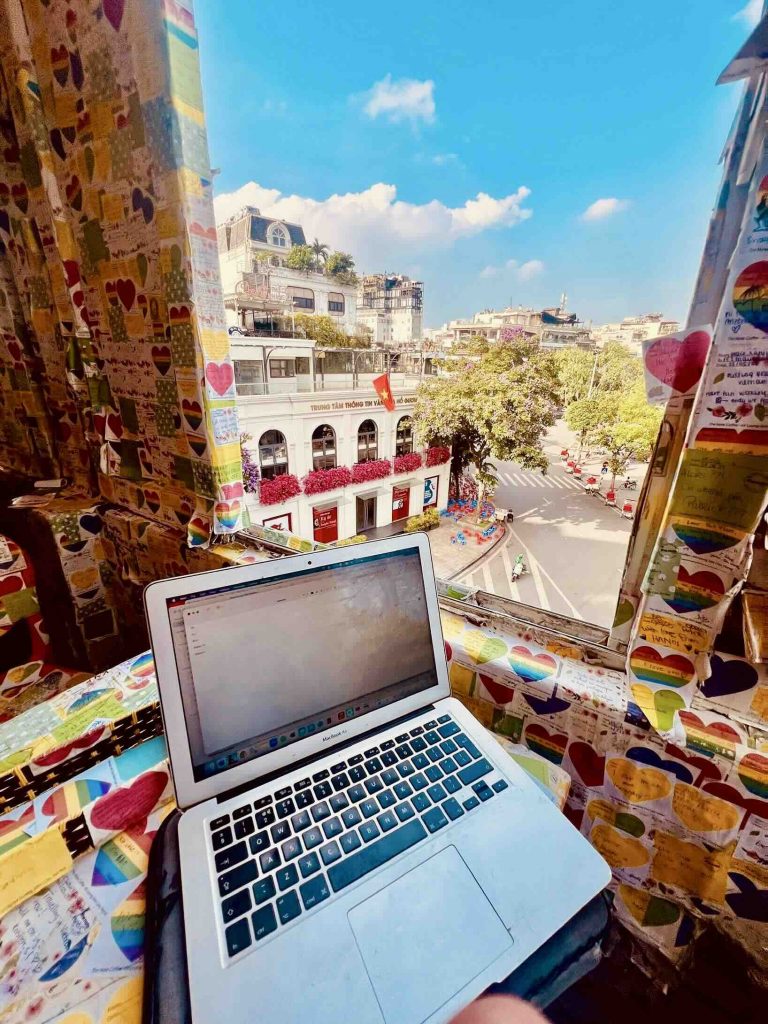
Working from Note Coffee, Hanoi
Before looking at individual countries, a few things immediately jump out from the numbers. Across 20 months and 25 countries, my average spend came out at approximately £3,750 per month, or £45,000 per year.
The second surprise was that accommodation wasn’t actually the biggest expense. Apartments accounted for less than a third of total spending, remarkably similar to UK rental affordability ratios. Many aspiring nomads obsess over saving £5 a night on accommodation or assume Airbnb prices reflect local living costs. The real gains come from controlling day-to-day spending. Lifestyle creep is the real enemy.
Perhaps the biggest surprise was South America. Before travelling I assumed Southeast Asia would dominate on value. In reality there are some great nomad hotspots like Colombia and the cheapest country in the world? Bolivia.
For me, Vietnam is the best country in the world to be a Digital Nomad. It is easy to make significant surplus income just by being there. At just £2,338 per month, it offers an exceptional combination of affordability, food, culture, safety and quality of life.
Da Nang is particularly impressive, costing around 30% less than Hanoi or Ho Chi Minh City while offering a thriving nomad community. It is one of the few places where eating out can be as good value as cooking, making it easy to maintain a great lifestyle on a modest budget.
A person earning £60,000 in the UK could be struggling to save in London, while somebody earning exactly the same amount remotely in Vietnam can retain £30k a year. Digital nomadism is not simply about travel it can help you run larger surpluses.

Ninh Binh, Vietnam
Bolivia was the cheapest country in the study at £2,051 per month, largely due to its economic crisis. Exchanging USD on the black market often yielded around 40% more Bolivianos than the official rate. The profits in Bolivia were significant, but so were the inconveniences. During my stay I ended up walking 25km because of road blockades and infrastructure was not always reliable. Bolivia is a fascinating and beautiful country that is well worth visiting, but it demonstrates an important truth: the cheapest destination is not always the best destination.
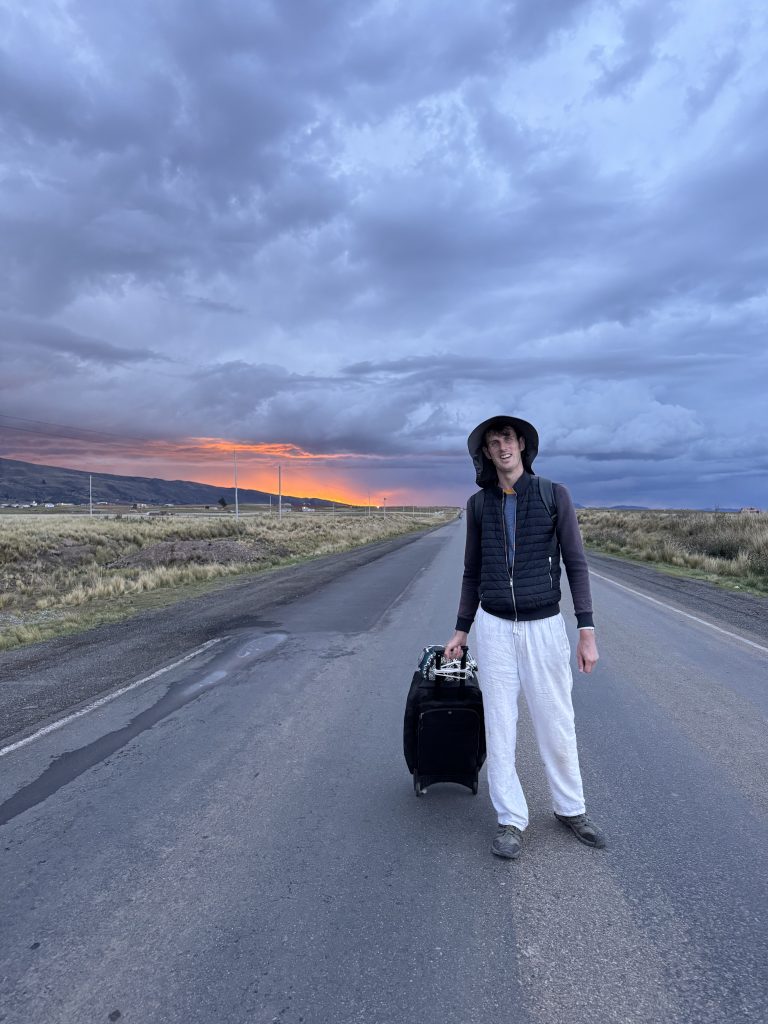
Walking on the road between Bolivan Blocados
At £2,832 per month, Colombia offered outstanding value. Bogotá was one of my favourite cities and I even returned on the way home. Modern apartments, excellent coffee, strong internet and £7 lunch menus make it easy to live well without spending much money. Medellín also has one of the world’s largest nomad communities and it is an excellent place to visit and make significant profits. The main downside is crime. As Colombians say, “Don’t show papaya” — don’t make yourself an easy target.
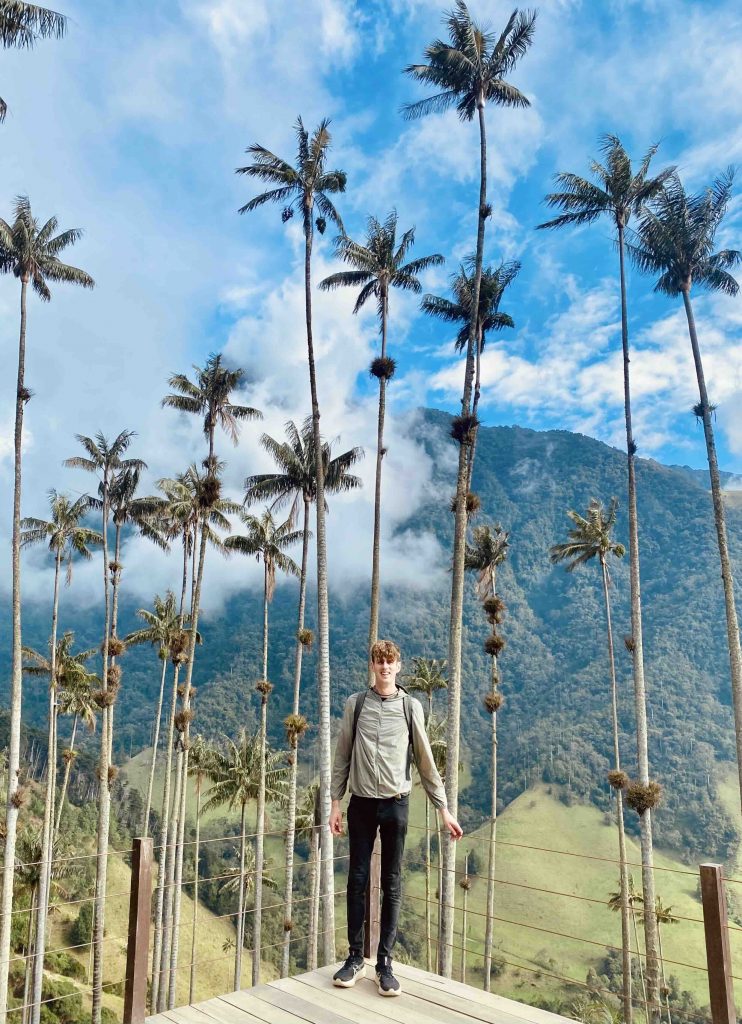
Valle De Coccora, Colombia
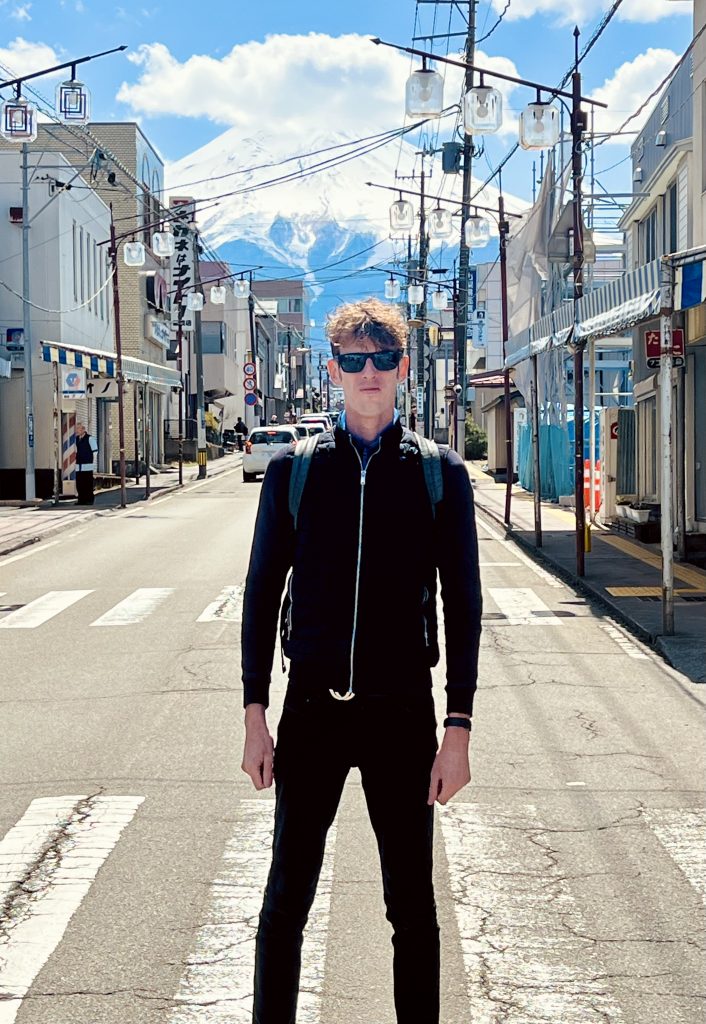
Japan averaged £5,126 per month. Apartments can be expensive, often exceeding £100 per night, but the weak Yen means supermarkets, transport and restaurants remain surprisingly affordable. If you’re prepared to cook regularly, Japan offers excellent value compared with many developed countries. In fact, Japan proved cheaper than Germany, Belgium, Australia and Singapore despite its reputation as one of the world’s most expensive destinations. More importantly, it is one of the most rewarding countries I have ever visited.
At £6,555 per month, Singapore was comfortably the most expensive destination. Everything works. Everything is clean. Everything is efficient. Unfortunately, everything is expensive too, so I only hung around for an extended weekend. Even a landlord has limits!
Living my nomad lifestyle in Singapore instead of Vietnam would have cost an additional £50,000 per year. That’s effectively the equivalent of a full UK salary earned without working a single extra hour, simply by choosing a different location. It is the strongest example in the entire dataset of the power of global arbitrage.

This is the million-dollar question. The average cost of my 20-month digital nomad lifestyle came out at approximately £45,000 per year, or around £3,750 per month. To generate that level of spending power as a UK employee would typically require a salary of around £60,000 per year before tax. The good news is that not every nomad needs to travel everywhere.
The internet often sells the fantasy that anyone can travel the world indefinitely on a few hundred pounds a month. The reality is less dramatic but far more achievable. The biggest lesson from the data is that Digital Nomadism is less about earning more money and more about spending it in the right places.
Digital nomadism is about avoiding lifestyle creep, using global arbitrage intelligently and building a life that costs less than the one you left behind. I come back to the UK with a significant savings that otherwise would have been spent.
See DIGITALNOMADEXPENSES.xlsx for exact dates and breakdown.
| Rank | Country / Location | Monthly Cost | Annual Cost | Approx UK Salary Required |
| 1 | Bolivia | £2,051 | £24,617 | £31,000 |
| 2 | Vietnam | £2,338 | £28,056 | £36,000 |
| 3 | Thailand (Bangkok) | £2,841 | £34,092 | £44,000 |
| 4 | Colombia | £2,832 | £33,984 | £44,000 |
| 5 | Cambodia | £3,032 | £36,384 | £47,000 |
| 6 | Paraguay | £3,150 | £37,800 | £49,000 |
| 7 | Argentina | £3,223 | £38,676 | £50,000 |
| 8 | Ecuador | £3,268 | £39,216 | £51,000 |
| 9 | Turkey (Antalya & Cappadocia) | £3,467 | £41,604 | £54,000 |
| 10 | Istanbul | £3,471 | £41,652 | £54,000 |
| 11 | Peru | £3,810 | £45,720 | £61,000 |
| 12 | Brazil | £3,882 | £46,584 | £62,000 |
| 13 | Uruguay | £4,254 | £51,048 | £70,000 |
| 14 | Russia | £4,275 | £51,300 | £70,000 |
| 15 | Austria | £4,444 | £53,328 | £73,000 |
| 16 | Hungary | £4,748 | £56,982 | £78,000 |
| 17 | Romania | £4,760 | £57,120 | £78,000 |
| 18 | Taiwan | £4,837 | £58,044 | £79,000 |
| 19 | Chile | £4,883 | £58,596 | £80,000 |
| 20 | Japan | £5,126 | £61,512 | £88,000 |
| 21 | Germany (Bavaria) | £5,687 | £68,244 | £101,000 |
| 22 | Belgium | £5,835 | £70,020 | £104,000 |
| 23 | Australia (Melbourne) | £6,012 | £72,144 | £108,000 |
| 24 | Singapore | £6,555 | £78,660 | £120,000 |